A tattoo can be one of the most meaningful souvenirs you bring home from Istanbul. The city has a strong creative scene and artists working in everything from fine-line script to bold ornamental pieces. Before you choose a design or sit in the chair, it is worth understanding the basics of tattoo hygiene Istanbul visitors should know.
If you are wondering, “is it safe to get a tattoo in Istanbul?” the practical answer is: it can be — when you choose a professional studio that follows clear hygiene practices, communicates openly, and gives proper aftercare guidance. Quality varies from studio to studio, so tourists should know what to look for.
This guide covers best practices that help you identify a hygienic tattoo studio Istanbul travellers can feel more confident visiting. It is not medical or legal advice — it helps you ask better questions, spot red flags, and plan carefully. For trip timing, see getting a tattoo in Istanbul. Near Galata, walk-in tattoos can work for small ideas when hygiene standards are clear.
Why hygiene matters when getting tattooed abroad
Getting a tattoo opens the skin with needles and places pigment into the surface layers. Cleanliness is not only about whether a studio “looks nice.” It is about how the artist prepares the workspace, handles equipment, prevents cross-contamination, and guides you through healing.
For tourists, hygiene matters even more because you may be adjusting to a new city, walking long distances after the appointment, swimming or sightseeing soon after, or flying home before the tattoo has fully settled.
A responsible studio helps you plan timing, placement, and aftercare around your trip — not against it.
Is it safe to get a tattoo in Istanbul?
Many tourists ask whether Istanbul is a safe place for a tattoo. The city has professional artists and studios, but safety depends on the individual studio’s standards — not the destination alone.
Clean & transparent
The studio is organized and open about how the station is prepared before your session.
Single-use needles
Needles and cartridges are sealed, opened for your session, and disposed of afterward.
Fresh gloves
The artist wears gloves and changes them when touching anything outside the clean working zone.
Clear aftercare
You leave with instructions you understand — especially useful if you are travelling in English.
A good studio will not treat hygiene questions as annoying. They should explain the process calmly and confidently.
What a hygienic tattoo studio should look like
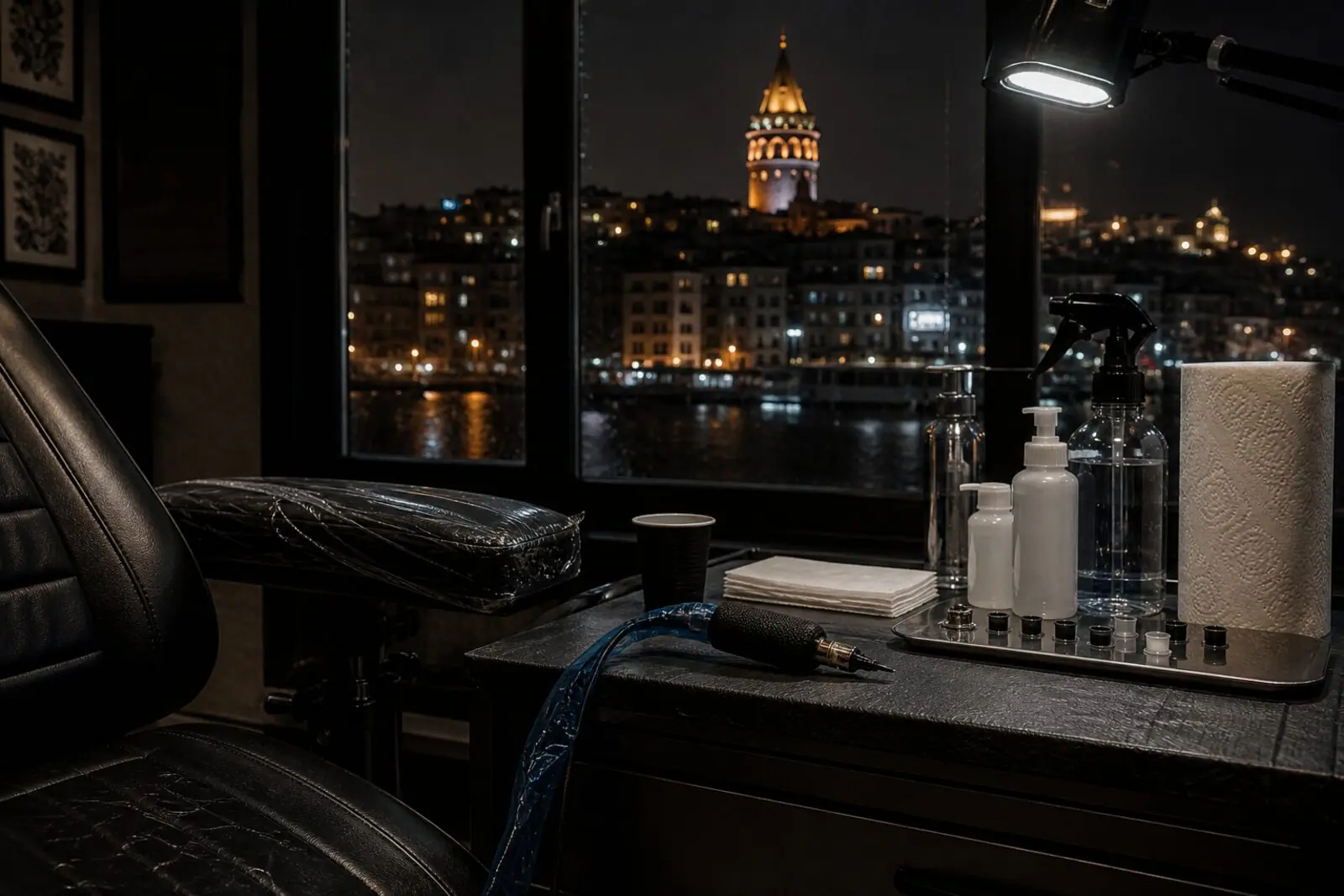
When you walk in, the first impression should feel professional rather than chaotic. It does not need to look like a hospital — but it should feel clean, controlled, and well-managed.
A clean reception and working area
The waiting area should be tidy. The tattooing area should be separate enough to avoid unnecessary traffic. Food, drinks, and unrelated clutter should not sit on the tattoo station.
Clear setup before the session
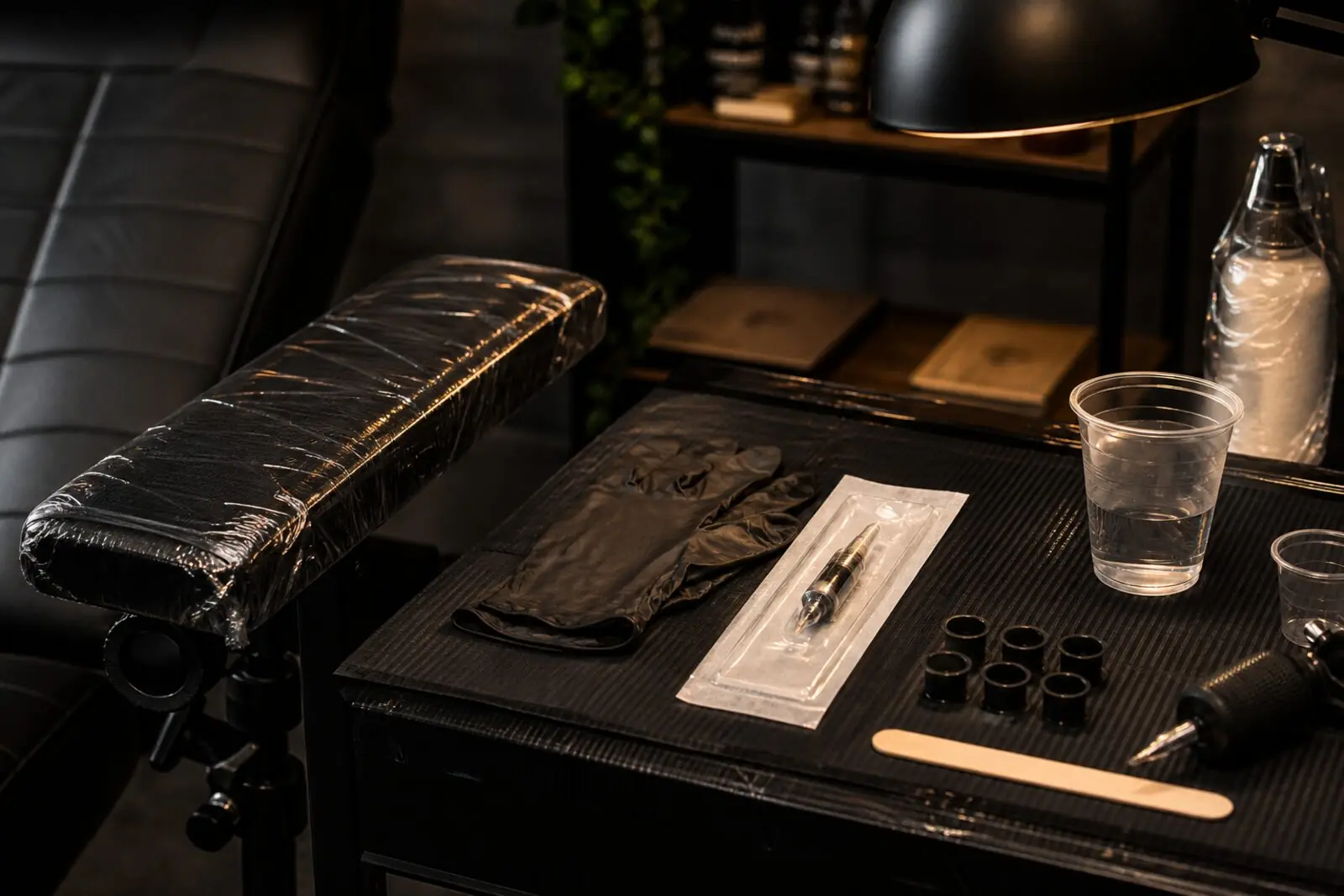
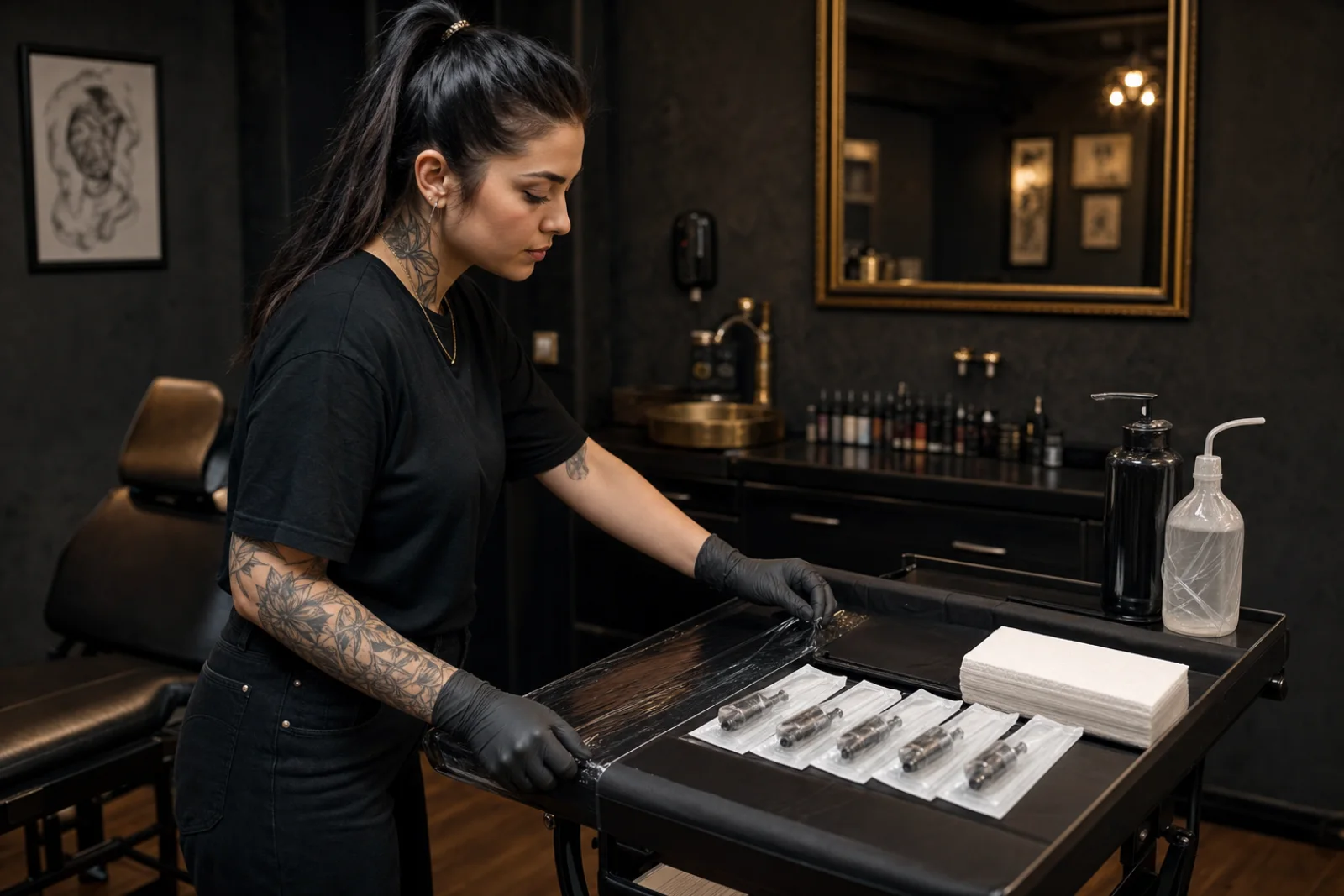
Before tattooing begins, the artist should prepare the station with fresh barriers, clean supplies, and sealed items. Many professionals set up while you are present so you can see what is opened and used.
Disposable items where appropriate
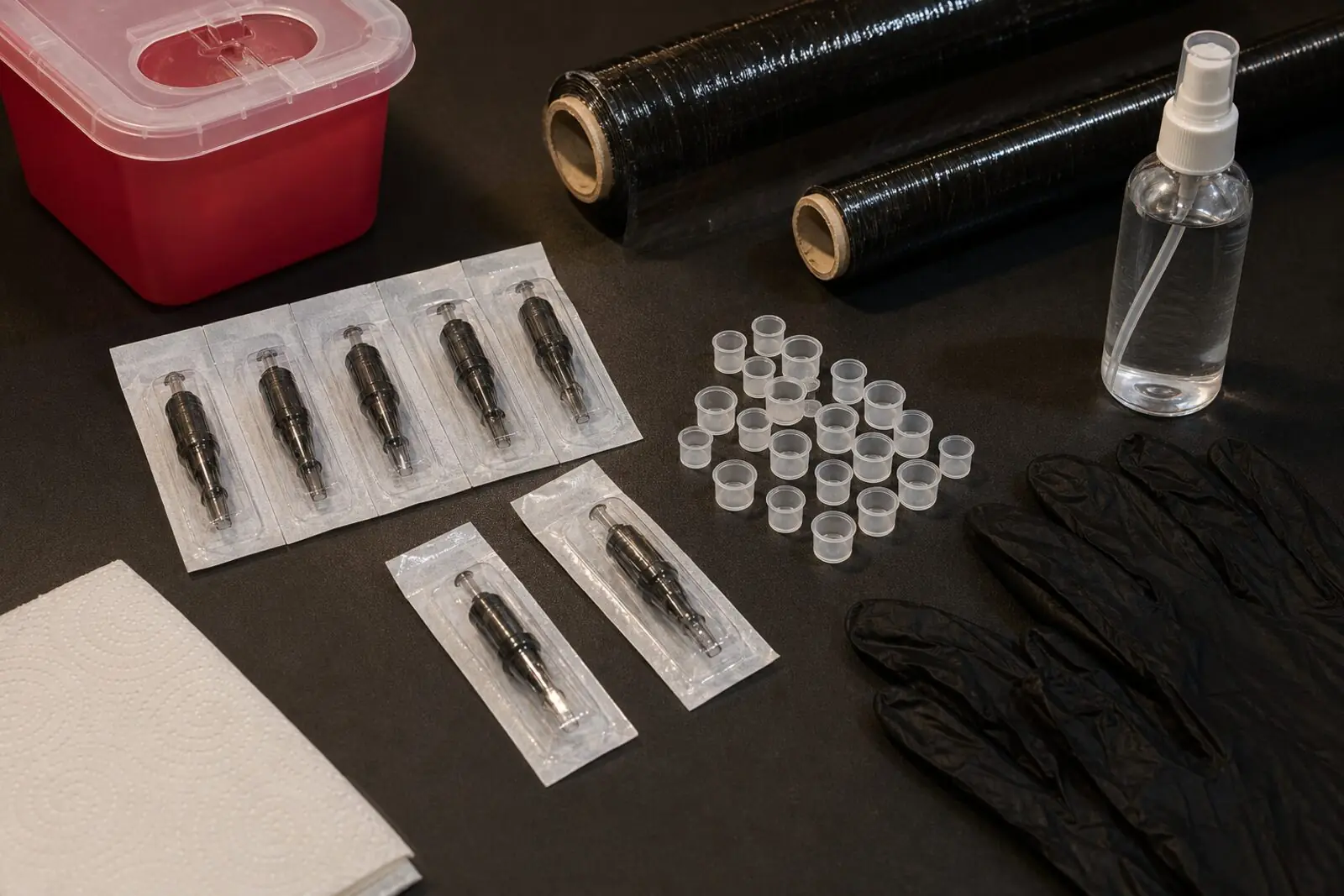
Single-use items reduce contamination risk — needles, cartridges, razors, ink caps, gloves, paper towels, and protective covers.
Professional attitude toward questions
If you ask about tattoo sterilization standards, you should get a clear explanation of what is single-use, what is sterilized, and how the workspace is cleaned — not a dismissive shrug.
Understanding tattoo sterilization standards
You do not need to be an expert. A few basics go a long way.
Single-use needles and cartridges
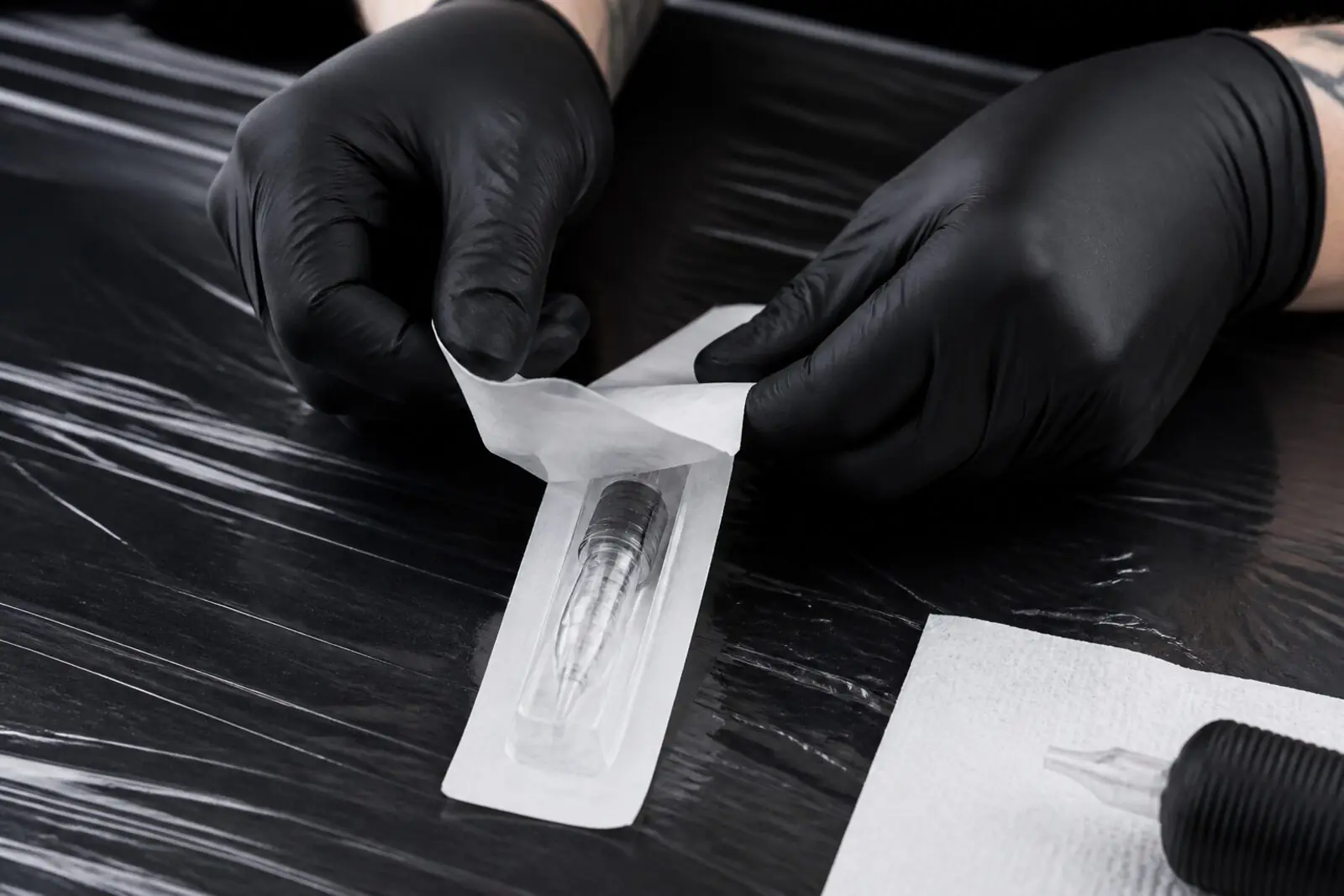
Tattoo needles or cartridges should be sterile, sealed, and single-use. They should be opened from packaging for your session and disposed of in an appropriate sharps container. If you do not see sealed packaging, it is reasonable to ask.
Reusable tools and sterilization
Some equipment may be reusable. If grips, tubes, or tools are reused, they should go through a proper cleaning and sterilization process first. A simple question works: “Are the needles single-use, and how do you sterilize reusable equipment?”
Barrier protection
Barrier film and protective covers are often used on machines, cables, spray bottles, armrests, and surfaces. The point is to reduce cross-contamination when gloved hands touch equipment during the session.
Gloves and ink handling
Gloves should be worn during setup and tattooing, and changed after touching phones, door handles, keyboards, or personal items. Ink should be poured into small single-use caps — leftover ink should not go back into the original bottle.
Questions tourists should ask before booking
Before committing, ask a few direct but polite questions. Professionals understand that travellers want reassurance.
- Do you use single-use needles or cartridges?
- Will the needle packaging be opened before the session?
- How do you clean and prepare the workstation?
- What equipment is disposable, and what is sterilized?
- Do you provide aftercare instructions in English?
- How long should I avoid swimming, sun, or heavy sweating?
- Can I see healed examples of similar work?
- Is this placement practical if I am walking, sightseeing, or flying soon?
Already have an idea? Message Chill Ink on WhatsApp with references, placement, size, and travel dates. For small same-day pieces, check how walk-in tattoos in Galata work.
Red flags to avoid
If something feels rushed, unclear, or unhygienic, it is okay to walk away.
Be cautious if you notice needles not opened from sealed packaging, dirty work surfaces, no visible glove changes, artists touching phones with tattooing gloves, reused ink caps, pressure to start without consultation, no aftercare explanation, poor communication about design or placement, or dismissive answers about hygiene.
A studio focused on speed more than care is not worth the permanent mark. A low price is not worth compromising comfort, cleanliness, or confidence.
Tourist-specific safety tips for Istanbul

Even with a clean studio, your travel plans affect the experience.
Timing
Avoid tattooing right before a beach day, spa, intense sightseeing, or a long flight. Mid-trip often works well.
Placement
Ankles, feet, ribs, and inner arms meet shoes, bags, and backpacks — ask if the spot suits your itinerary.
Sun & water
Protect fresh ink from pools, sea, hammams, and direct sun during early healing. Details: swimming, sun & tattoos.
Walk-ins suit small, simple tattoos. Larger custom work, detailed script, ornamental pieces, realism, or cover-ups need advance planning. Explore styles on our tattoo hub or fine line in Istanbul if that is your direction.
How to evaluate an artist’s portfolio
Hygiene is essential — quality matters too. When reviewing portfolios, look for healed photos (not only fresh), consistent linework, smooth shading or colour packing for the style, experience with your style, similar size and detail, and clear photos without heavy filters.
Healed examples are especially useful for tourists because they show how the work settles over time.
Communication matters for visitors
A studio tourists can rely on should confirm design and placement expectations, estimated time, preparation tips, payment clarity, and aftercare you understand. If there is a language barrier, ask for instructions in English. You should not leave confused about how to care for your tattoo.
Chill Ink Tattoo & Piercing is on Büyük Hendek Caddesi No:3, Galata, Beyoğlu — a short walk from Galata Tower. Message us on WhatsApp in English with your idea and dates; we work with international travellers every day. Contact for hours and directions.
What to do before your appointment
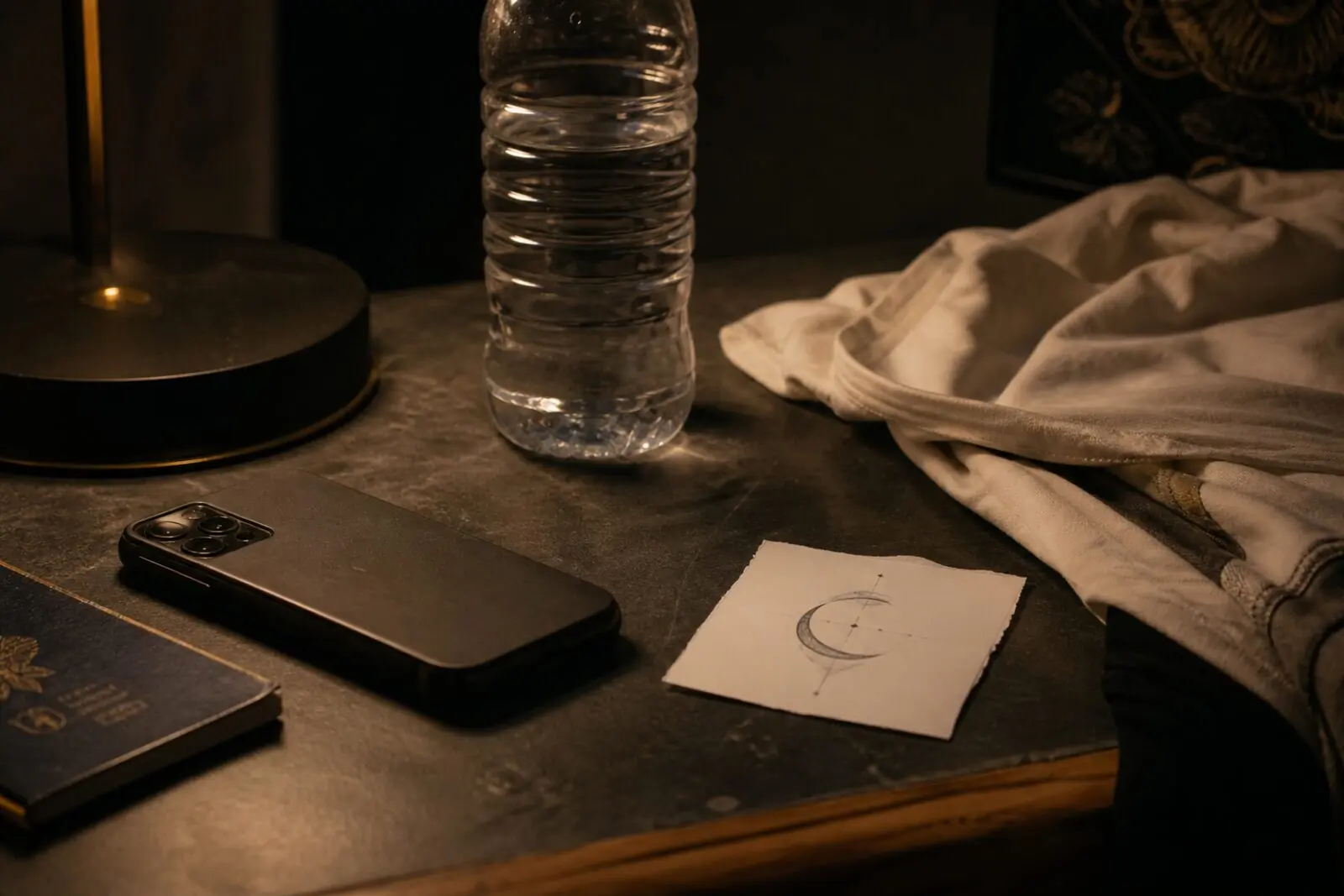
- Eat a proper meal before your session
- Drink water and avoid arriving dehydrated
- Wear comfortable clothing that gives access to the tattoo area
- Avoid heavy alcohol before the appointment
- Bring reference images if you have them
- Be honest about your travel schedule and planned activities
- Tell the artist if you feel unwell before the session
Do not apply numbing products, lotions, or oils unless your artist specifically says it is okay — they can affect stencil and tattooing.
What good aftercare guidance should include
Instructions vary by artist, style, placement, and bandage method. A professional studio should explain:
- When and how to remove the initial covering
- How to gently clean the tattoo
- What aftercare product to use, if recommended
- How often to moisturize
- What activities to avoid during early healing
- How to handle clothing friction
- What signs mean you should seek advice
- How to contact the studio with questions
For a day-by-day first week, read new tattoo first-week aftercare. Avoid relying only on random forums — your artist should be the first source for routine aftercare.
Short checklist: choosing a hygienic studio
- The studio looks clean, organized, and professional
- The artist answers hygiene questions clearly
- Needles or cartridges are sterile, sealed, and single-use
- Disposable supplies are not reused
- Work surfaces are disinfected and covered where needed
- Gloves are worn and changed appropriately
- Ink is poured into single-use caps
- Sharps are disposed of safely
- Design, size, placement, and price are reviewed before starting
- You receive clear aftercare instructions
- You feel comfortable saying yes, asking questions, or walking away
Make hygiene part of the plan
Getting tattooed in Istanbul can be a memorable part of your trip when you choose carefully. Focus on hygiene, communication, artist experience, and realistic travel planning — not only the flash sheet or the lowest price.
Ready to plan? Message Chill Ink on WhatsApp with your idea, preferred size, placement, and travel dates. We will tell you what is possible — walk-in or booked — near Galata Tower, with clear hygiene and aftercare guidance from the start.