A helix piercing sits through the upper ear cartilage — popular for studs, hoops, and curated ear stacks. Cartilage heals slowly compared to soft tissue: most helix piercings need three to six months before they feel fully settled, and some take up to a year.
Patience and consistent aftercare matter more than any single product. Knowing what to expect week by week helps you avoid the habits that prolong healing.
What to expect in the first weeks
The first two weeks are the most reactive. Expect tenderness, slight swelling, and a small amount of clear or pale yellow crust — that is lymph, not infection.
Cartilage heals on its own timeline. Consistency beats shortcuts.
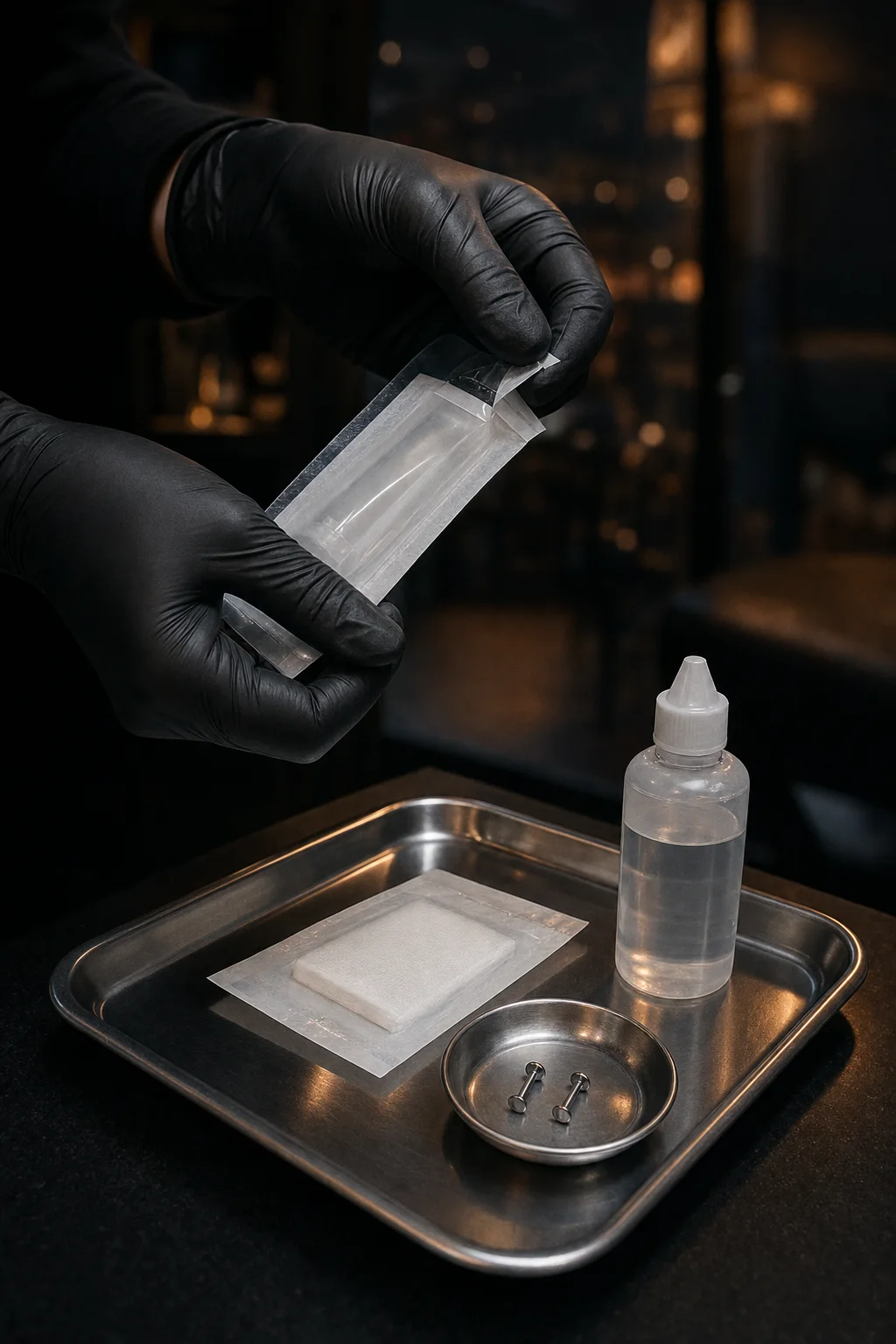
Clean twice daily with sterile saline or a saline solution made for piercings. Spray, let it sit for thirty seconds, then gently dry with clean gauze or a paper towel. Do not rotate the jewellery aggressively; movement irritates fresh cartilage.
Week 1–2
Most reactive phase. Tenderness, swelling, and light crusting are normal. Avoid sleeping on the pierced side.
Week 3–8
Swelling eases. The channel is still forming — do not change jewellery or add pressure from headphones or hats.
Month 3+
Many helix piercings feel settled, but cartilage can still be sensitive. A piercer can confirm when jewellery changes are safe.
First two weeks: daily habits
Avoid sleeping on the pierced side; a travel pillow with a hole in the middle helps many clients. Keep hair products, phone screens, and headphones away from the fresh piercing when possible.
- Clean twice daily with sterile saline — no harsh soaps or alcohol
- Pat dry gently; do not twist or rotate the jewellery
- Sleep on the opposite side or use a travel pillow
- Keep hands off unless cleaning
- Avoid swimming pools, hot tubs, and submerging the ear
- Do not remove the jewellery — even if it feels fine
Something feel off? Send a clear photo on WhatsApp — we will tell you whether it is normal progress or worth coming in for a check.
Jewellery changes and downsizing
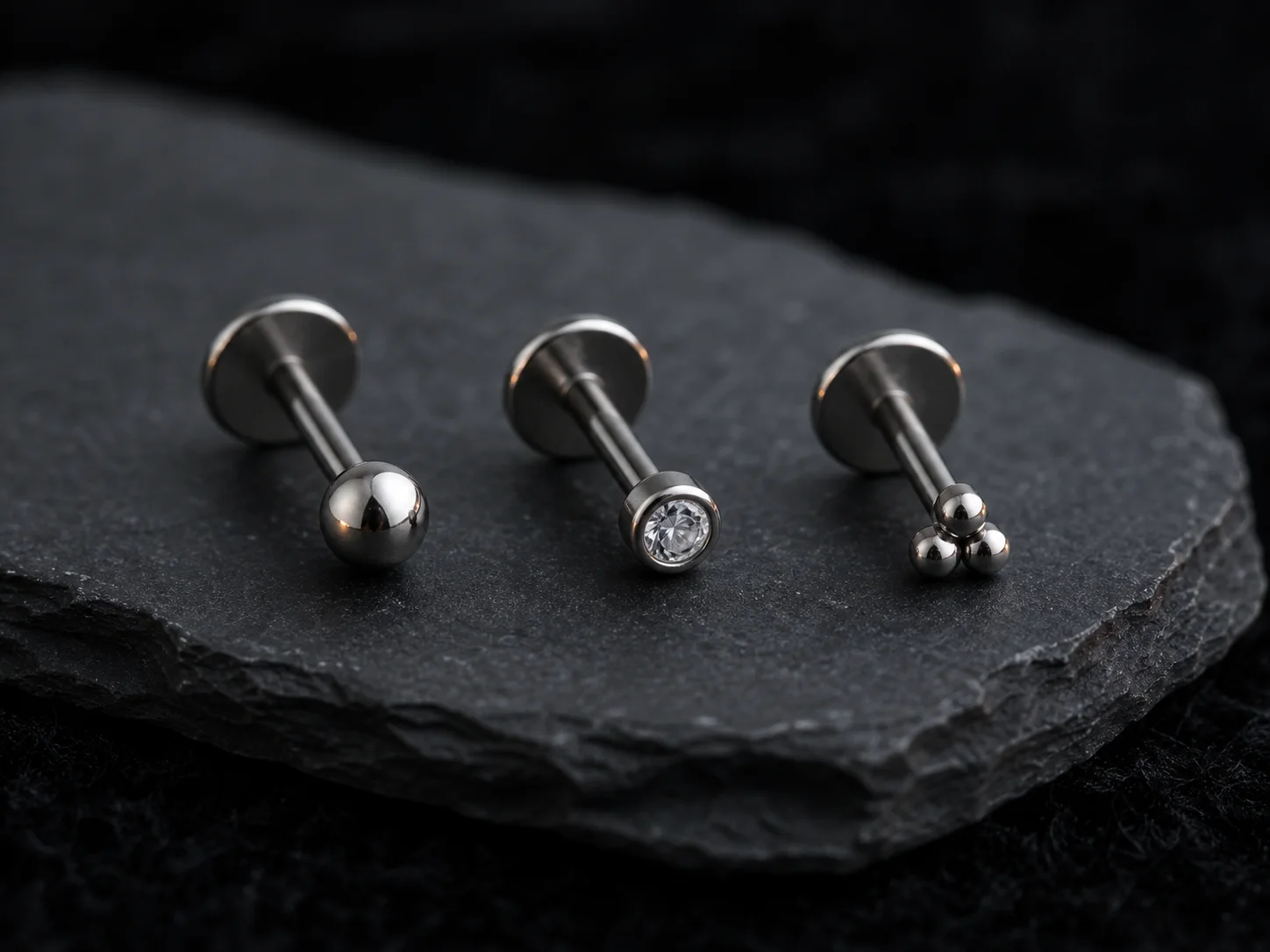
Do not change the jewellery until a piercer confirms you are healed — usually no sooner than three months for a standard helix. Downsizing the post length may be needed after initial swelling subsides; that is a quick in-studio adjustment, not a DIY swap.
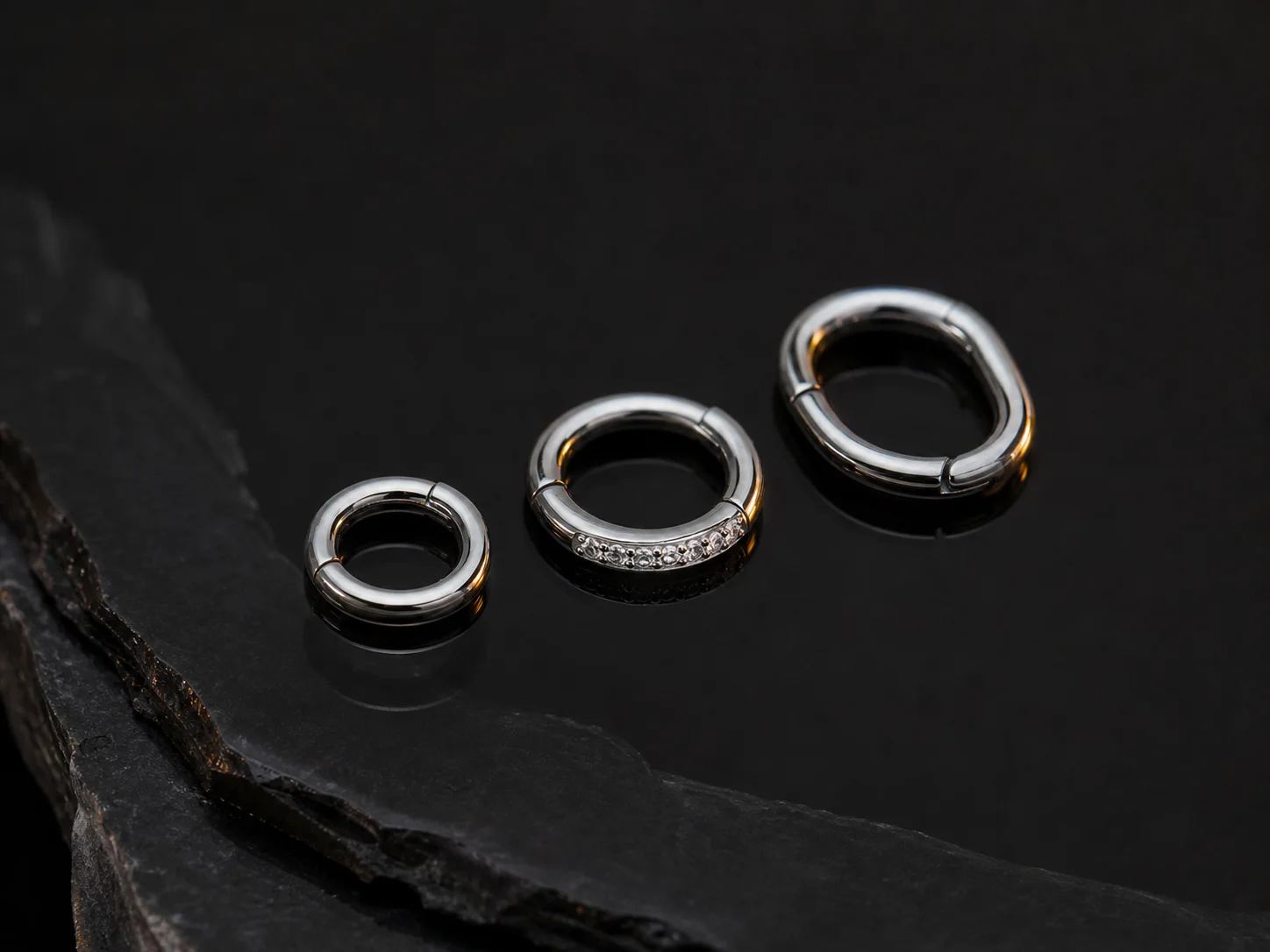
Hoops can wait until the channel is stable; switching too early causes bumps and prolonged irritation. At Chill Ink in Galata we use implant-grade titanium for initial helix piercings and explain aftercare before you leave.
Warning signs to watch for
Watch for problems: persistent throbbing pain, hot redness spreading beyond the ear, dark discharge, or a hard lump that grows. Irritation bumps are common and often linked to snagging, pressure from headphones, or sleeping position — not always infection.
We assess in person when possible and adjust aftercare or jewellery style accordingly. Contact the studio if something feels off during healing.
Heal with patience
A helix piercing is a long-term commitment to gentle care. At Chill Ink in Galata we use implant-grade titanium for initial helix piercings and explain aftercare before you leave.
If something feels off during healing, send a clear photo on WhatsApp — we will tell you whether it is normal progress or worth coming in for a check.